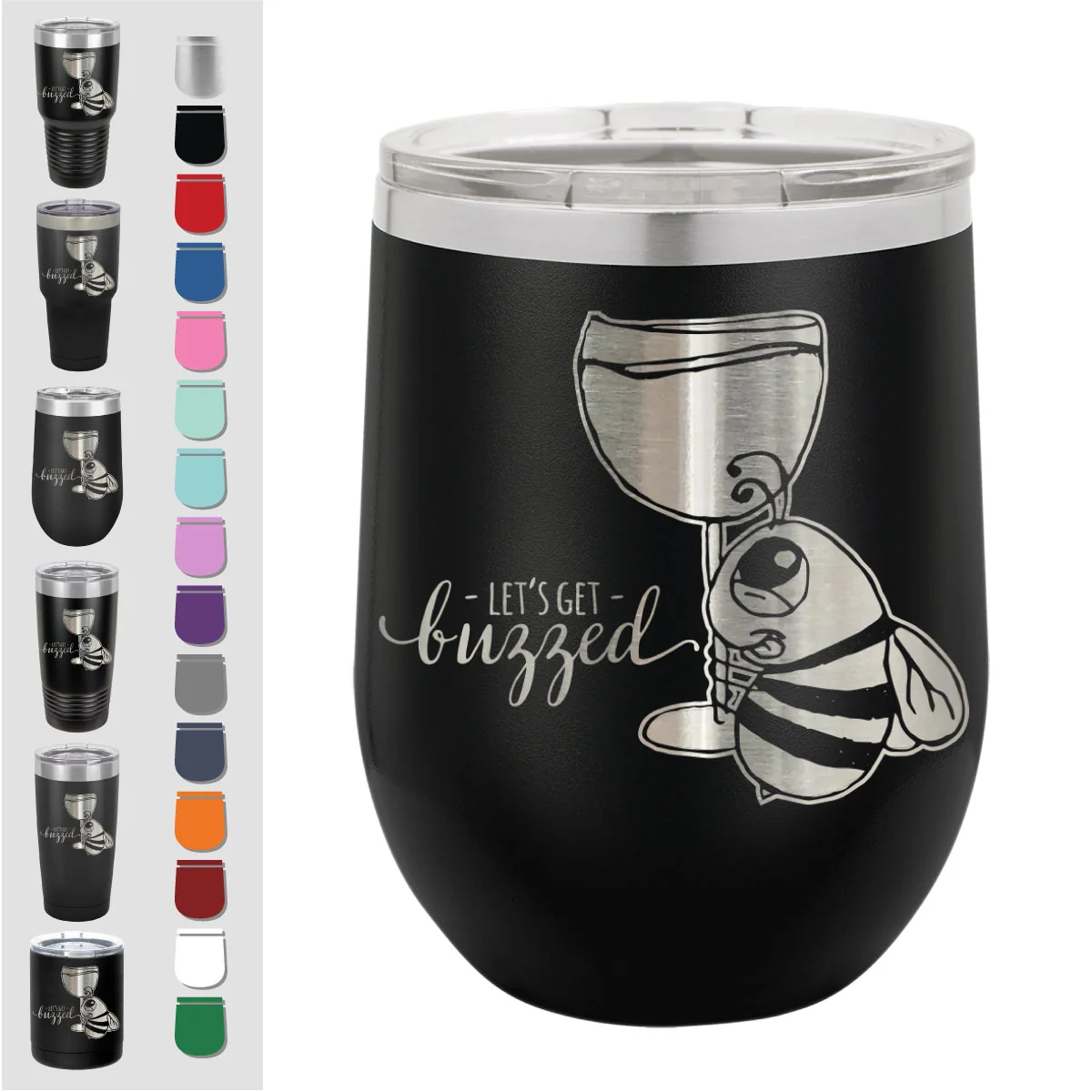
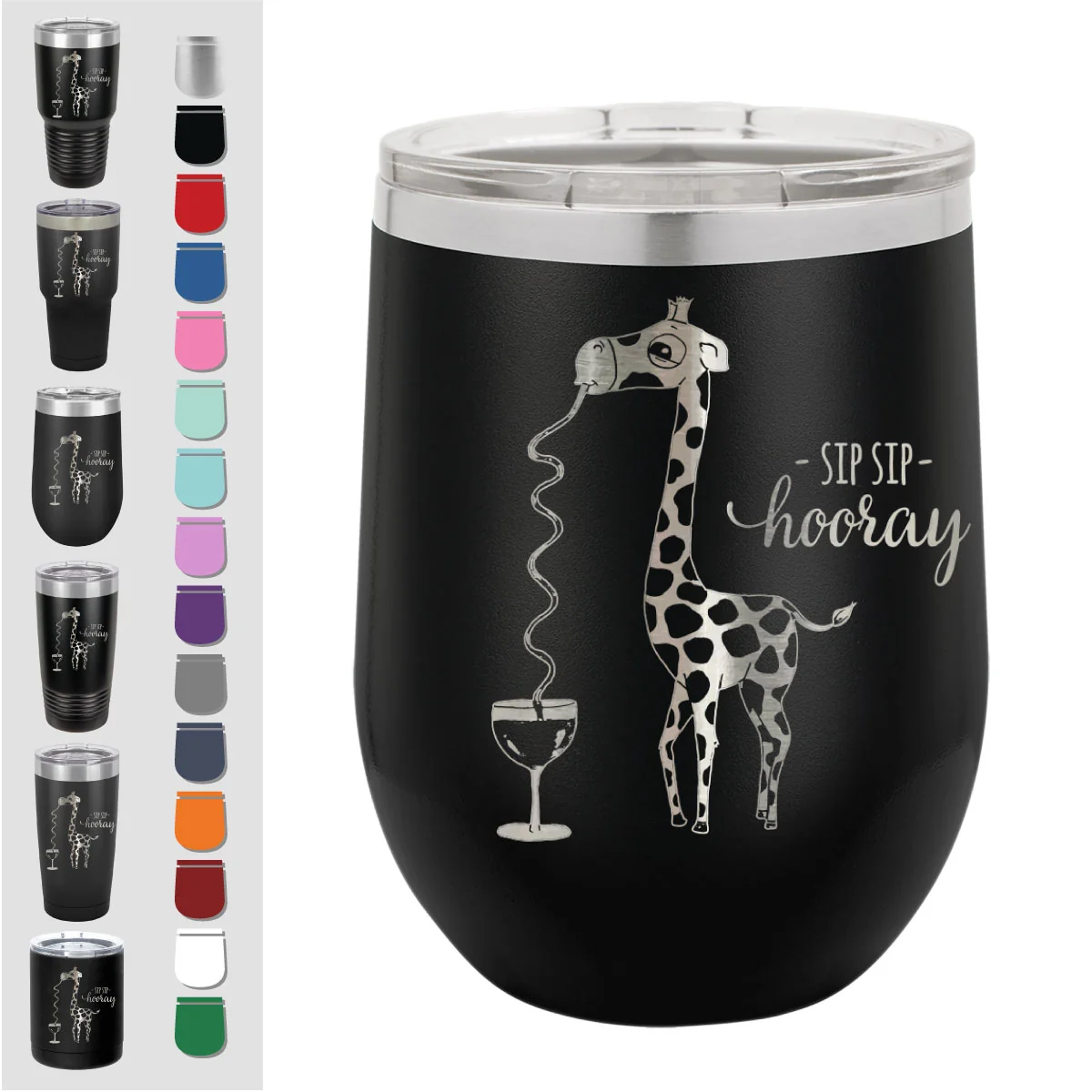
Your blank is half the decision
Here's a call I get almost every week: someone orders a case of 20 oz Silicone Promo Tumblers, tries to run a full-color logo wrap on them, and calls me when the ink beads up and wipes off. The tumbler isn't defective. The blank was wrong for the method.
So before you reorder, decide what's going onto the cup. Laser engraving and sublimation don't play by the same rules, and the coating on the blank decides which one you get.
Engraving: works on almost anything metal
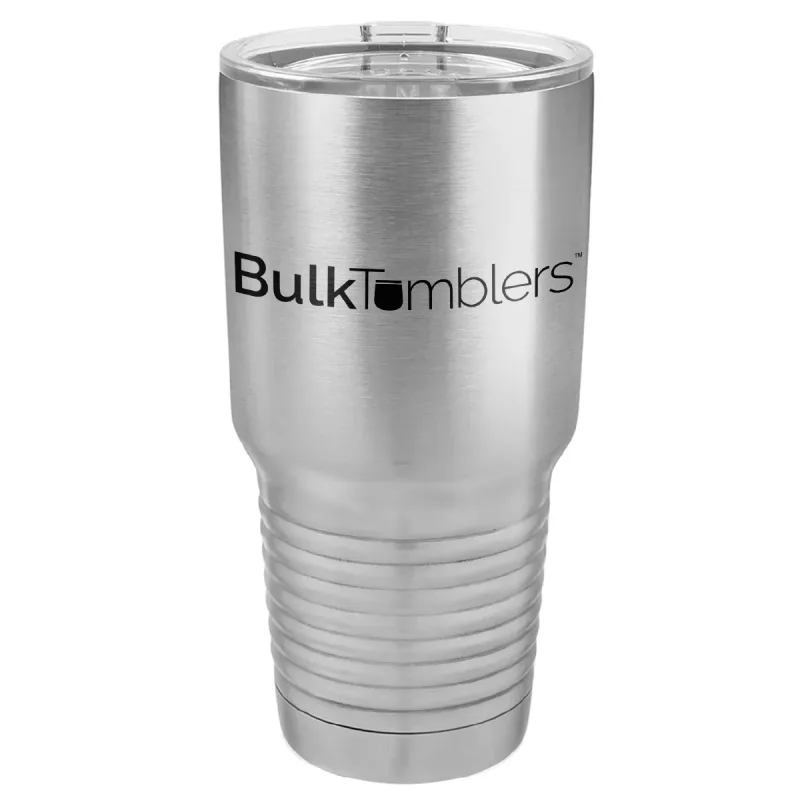
A fiber or CO2 laser burns through the outer layer and exposes the bare stainless underneath. That's why engraved logos come out as a permanent silver-on-color mark. No ink to chip, no coating to peel. It also means you can engrave odd shapes and still get a clean result.
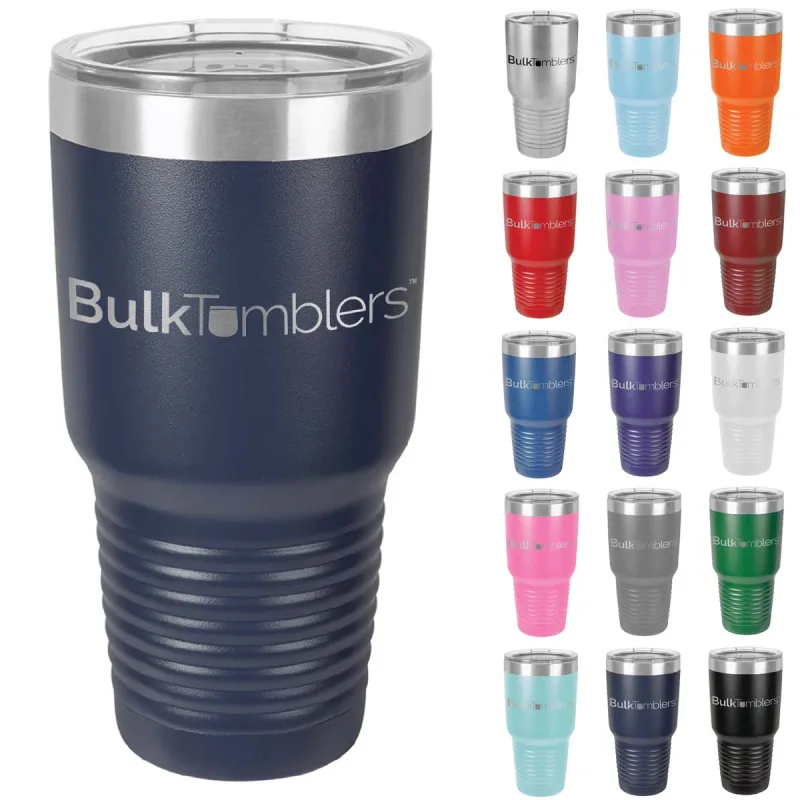
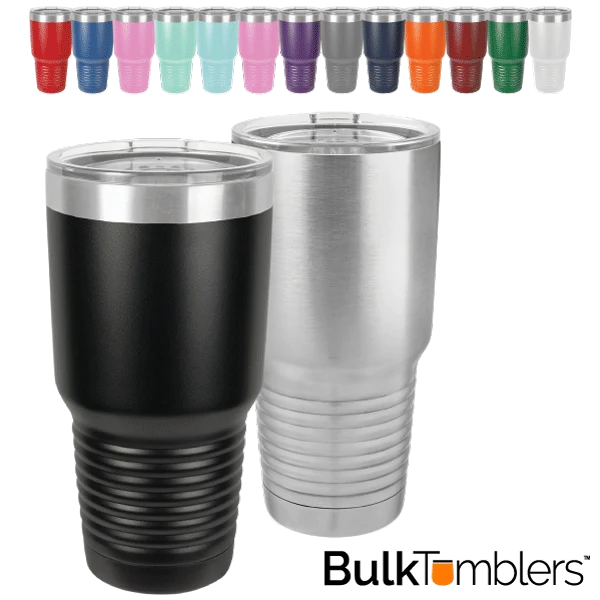
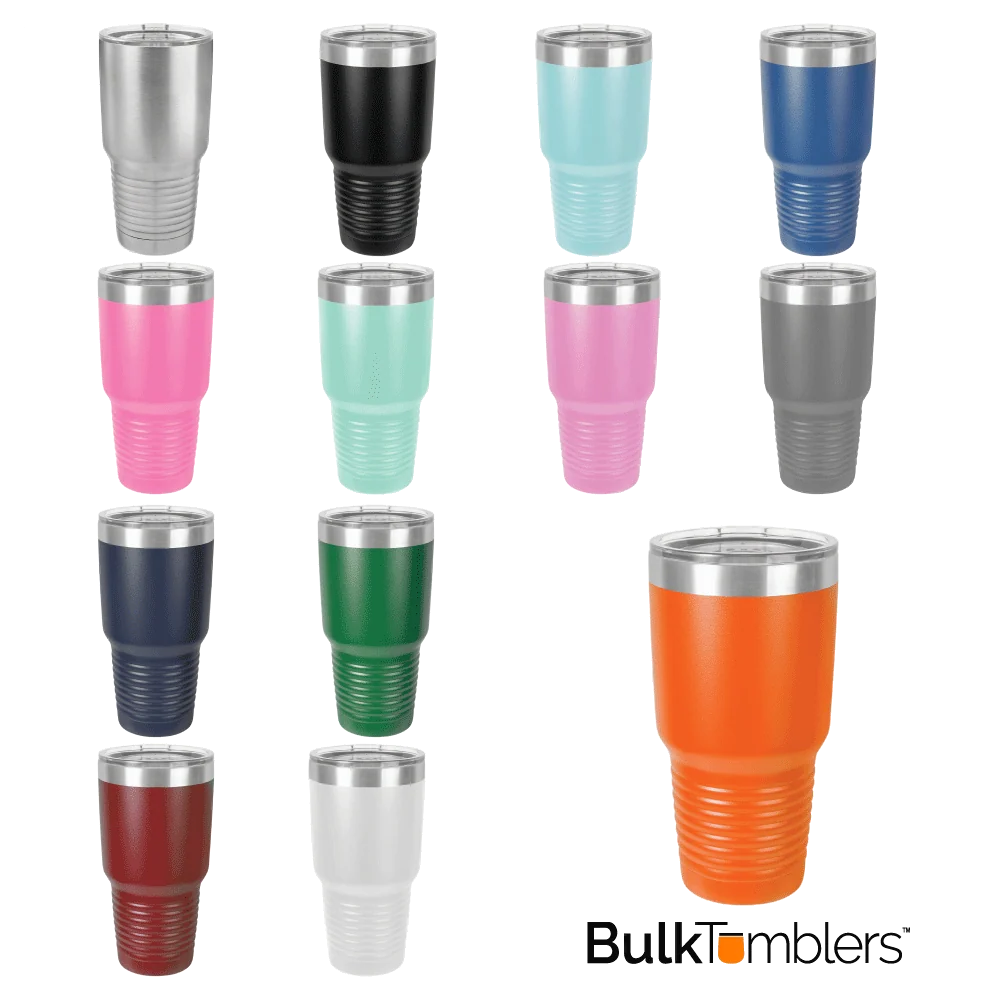
Powder coated blanks are the sweet spot. The coating is thick enough that the mark reads crisp and high-contrast, which is why 30 oz Promo Personalized Tumblers in 16 colors are such an easy sell for teams and events. Pick the color, send the vector, done.
Ion plated finishes behave differently. The plating is thin and reflective, so the engraved area tends to look tonal rather than sharply silver — think dark-on-dark on a black plated cup. It's a subtle, premium look, and it's not for everyone. If your client wants a logo you can read across a parking lot, steer them to powder coat instead.
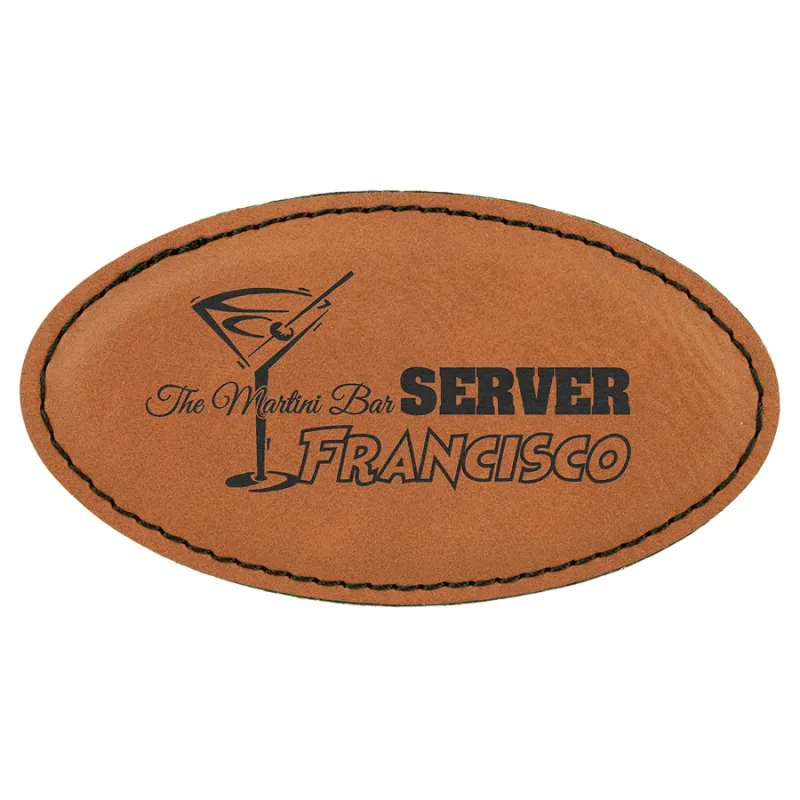
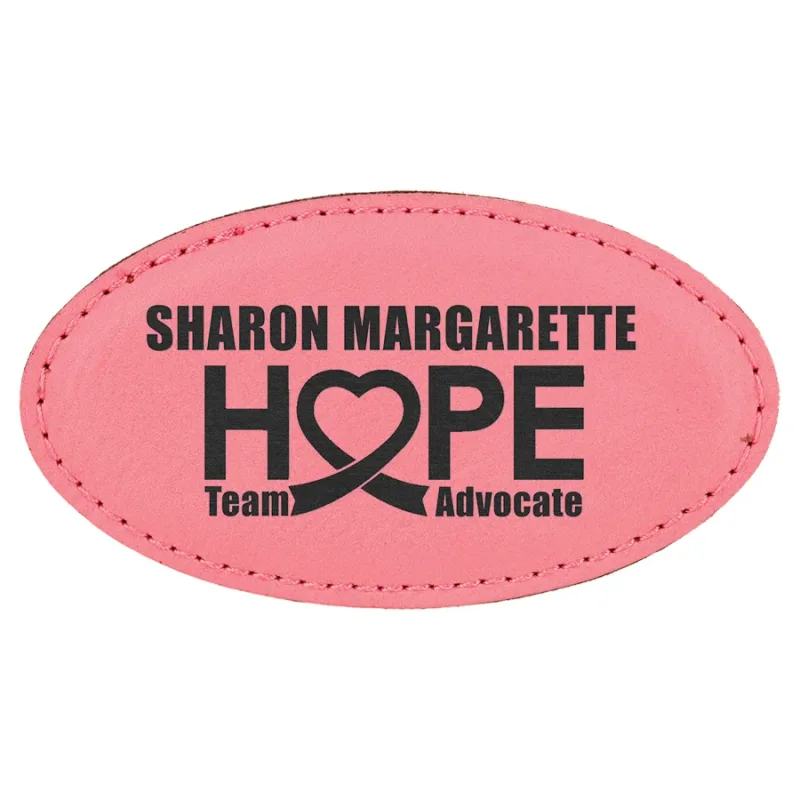
Engraving isn't limited to tumblers either. Leatherette takes a laser beautifully: it cuts deep, darkens the surface, and needs zero prep. That's why I keep laser engraved faux leather name badges in rotation for conference orders — they pair naturally with a matching drinkware set.
Sublimation: only on a polyester coating
Sublimation is a gas transfer. The dye turns to vapor around 380–400°F and bonds into polyester. Bare stainless has nothing for the dye to grab, so the blank has to carry a special coating. That coating is what makes 30 oz Stainless Steel Insulated SureGrip Tumblers and the white wine bottle sets work at all.
The payoff is full color. Gradients, photos, mascots with fourteen spot colors — sublimation handles all of it in one pass, and the print wraps seamlessly around the curve. Try that with a laser and you'll be doing four setup files and a prayer.
The catch: you can't sublimate onto a powder coated or ion plated body. If a customer sends artwork with a sunset gradient and you only stocked powder coated blanks, you're either ordering coated blanks or talking them into a one-color engrave. Plan that before the invoice, not after.
Mixing both in one bulk order
Plenty of buyers want both. A brewery might engrave 16 oz Promo Beer Pint Tumblers for the taproom staff and sublimate skinny tumblers for retail. That works fine — as long as you keep the two runs separate on the production floor. Engraving jobs don't need a heat press queue, and sublimation jobs don't need a laser file. Different tables, different prep, no crossed wires.
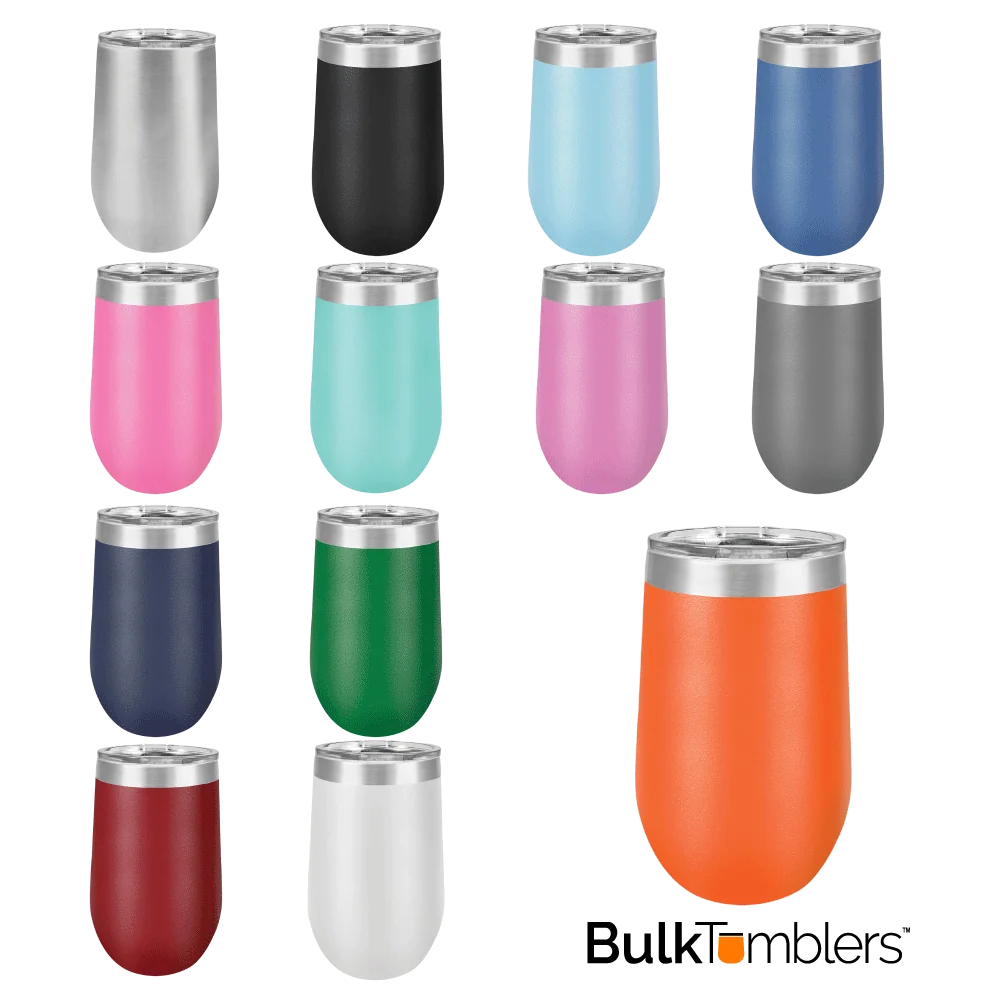
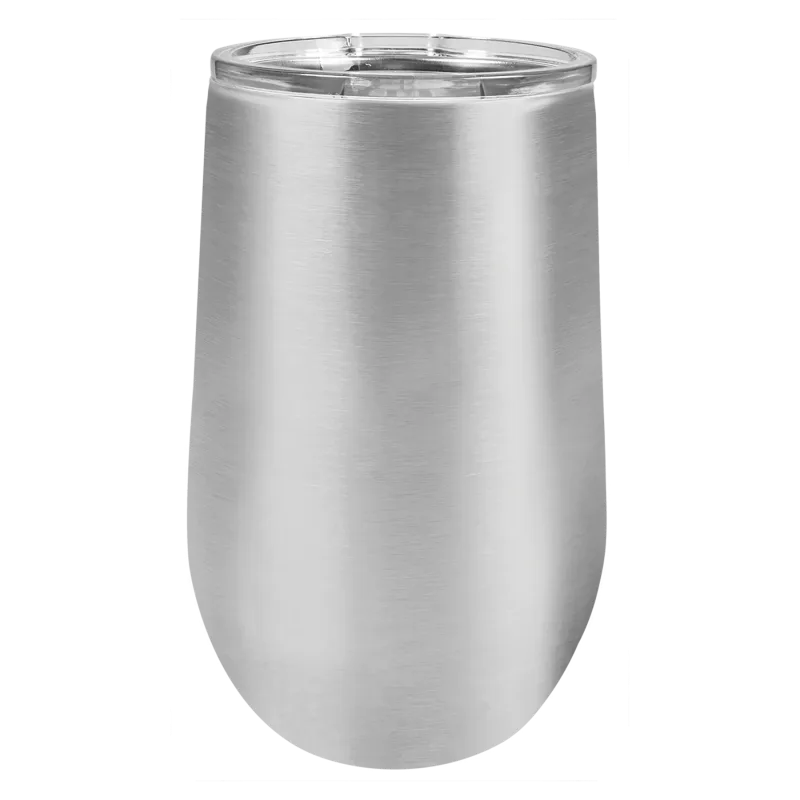
Where people lose money is doubling their setup work on the same decoration method. If you're engraving 20 oz Silicone Promo Tumblers and 20 oz Beer Pilsner Tumblers in the same order, that's two fixturing setups and often two laser passes. Ordering them as one combined run, with artwork sized for both, cuts that in half. Same logic applies if you're stacking a case of 24 stemless wine tumblers alongside a pilsner run — same plate, same jig, one afternoon.
Before you reorder, check three things
- Lid type. Screw-top slide, snap lid, straw included? A 40 oz travel mug and a 12 oz wine tumbler don't share a lid, and swapping lids after the fact is a headache you don't need.
- Coating vs bare. Powder coated and ion plated = engraving. White polyester-coated = sublimation. Wrong pairing, wasted blanks.
- Template file. If you're doing full-color wraps, ask for the design template before you order. It saves a proof round and a lot of guessing about where the curve eats your artwork.
One more thing worth doing: order a single blank of any new style and run your actual decoration on it before committing to a case of 24. Two dollars of testing beats a shelf of cups you can't sell.